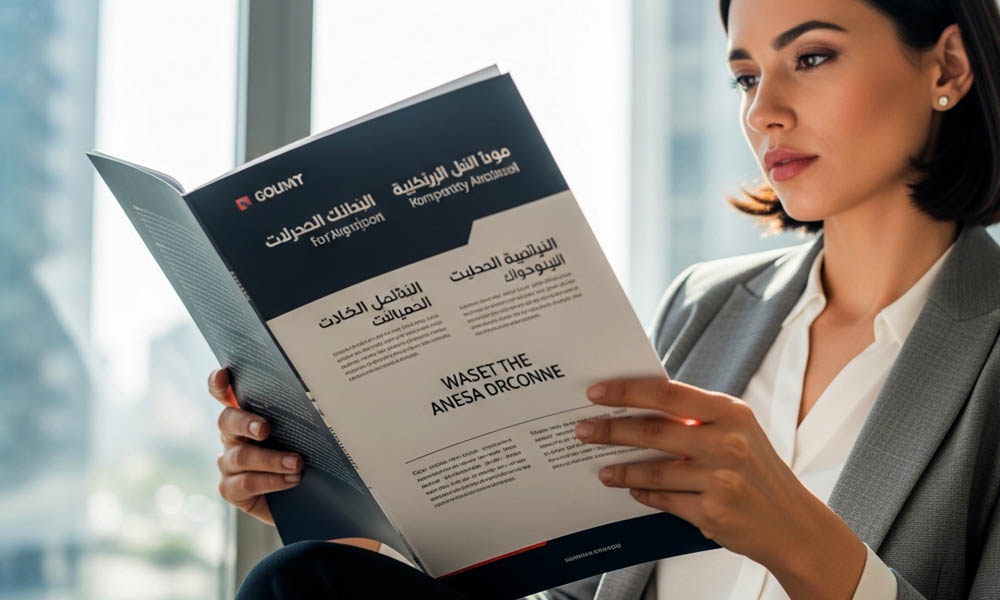
At CIBS Media, we’ve seen firsthand how strategic bilingual printing can elevate brand perception, boost engagement, and drive conversions. Let’s explore how brands can get it right.
Why Bilingual Printing Matters in Dubai
From retail signage to corporate brochures, bilingual printing ensures:
• Wider audience engagement
• Compliance with local cultural expectations
• Stronger brand credibilityFor example, government regulations often require Arabic to be present in public-facing materials, making it essential for businesses to integrate both languages effectively.
Understanding Design Direction: RTL vs LTR
Key considerations:
• Layout symmetry must be carefully planned.
• Avoid mirroring designs blindly, adapt them.
A well-designed bilingual layout doesn’t feel forced; it feels intentional. Designers must ensure both languages have equal visual weight and readability.
Typography Choices That Work
Best practices:
• Maintain consistent font hierarchy across both languages
• Avoid overly decorative fonts that reduce readability
Cultural Sensitivity in Visual Design
Keep in mind:
• Avoid culturally inappropriate imagery
• Ensure Arabic translations are accurate and contextually correct
Print Layout Strategies for Maximum Impact
Smart layout techniques:
• Layered design: Both languages integrated within the same visual flow
• Hierarchical emphasis: Prioritize one language based on target audience
Common Mistakes to Avoid
• Direct translation without localization
• Ignoring font compatibility• Poor spacing and alignment
• Overcrowded designs
The Role of Professional Printing Services
Working with an experienced printing partner like CIBS Media ensures:
• High-quality material selection
• Precision in bilingual layouts
From business cards to large-format printing, professional execution makes all the difference.
Designing for a bilingual market like Dubai is both a challenge and an opportunity. When done right, it allows brands to connect deeply with diverse audiences while maintaining a cohesive identity. The key lies in thoughtful design, cultural understanding, and expert printing execution.
FAQs
Bilingual printing helps businesses connect with both local Arabic-speaking audiences and international English-speaking customers, improving brand reach and credibility.
2. What is the biggest challenge in Arabic and English design?
The main challenge is balancing RTL (Arabic) and LTR (English) layouts while maintaining visual harmony and readability.3. Can I directly translate English content into Arabic for printing?
Not recommended. Direct translation often loses context. Proper localization ensures cultural accuracy and better engagement.4. What fonts work best for bilingual printing?
Clean sans-serif fonts for English paired with modern, readable Arabic fonts create the best visual balance.5. How can professional printing services help bilingual brands?
Professional services ensure accurate layouts, high-quality printing, and culturally appropriate designs, reducing errors and improving overall brand impact.